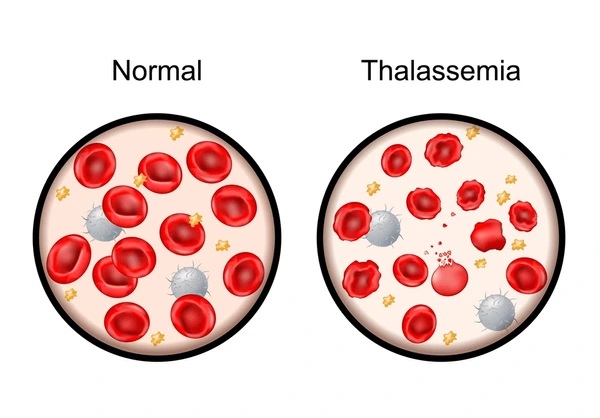
What is thalassemia?

Thalassemia is an inherited blood disorder that causes the body to produce less hemoglobin, the protein in red blood cells that helps them carry oxygen from the lungs to all parts of the body. Hemoglobin is made up of four parts: two alpha proteins and two beta proteins. Thalassemia affects one or more of the genes that produce these proteins.

  • Inherited blood disorder
  • Low hemoglobin levels
  • Red blood cell damage.
  • Fatigue and weakness
  • Frequent blood transfusions
  • Iron overload complications

About haemoglobinopathies

Haemoglobin disorders or haemoglobinopathies are a group of conditions affecting the human blood – more specifically an important substance or protein called haemoglobin contained in the red blood cells, hence the name haemoglobin disorders or haemoglobinopathies. Haemoglobin is a protein that consists of the alpha (α) and beta (β) parts or chains and which are in turn produced by the α-globin genes and β-globin genes respectively. Hence the diseases caused by haemoglobin abnormality either with regards to its production or its structure are divided into α-chain diseases (or α- globin gene) diseases, such as α-thalassaemia, and β-chain (β-globin gene) diseases, such as β-thalassaemia major and sickle cell disease.

#